What a luxury build costs here
Tap to expand
What a luxury build costs here
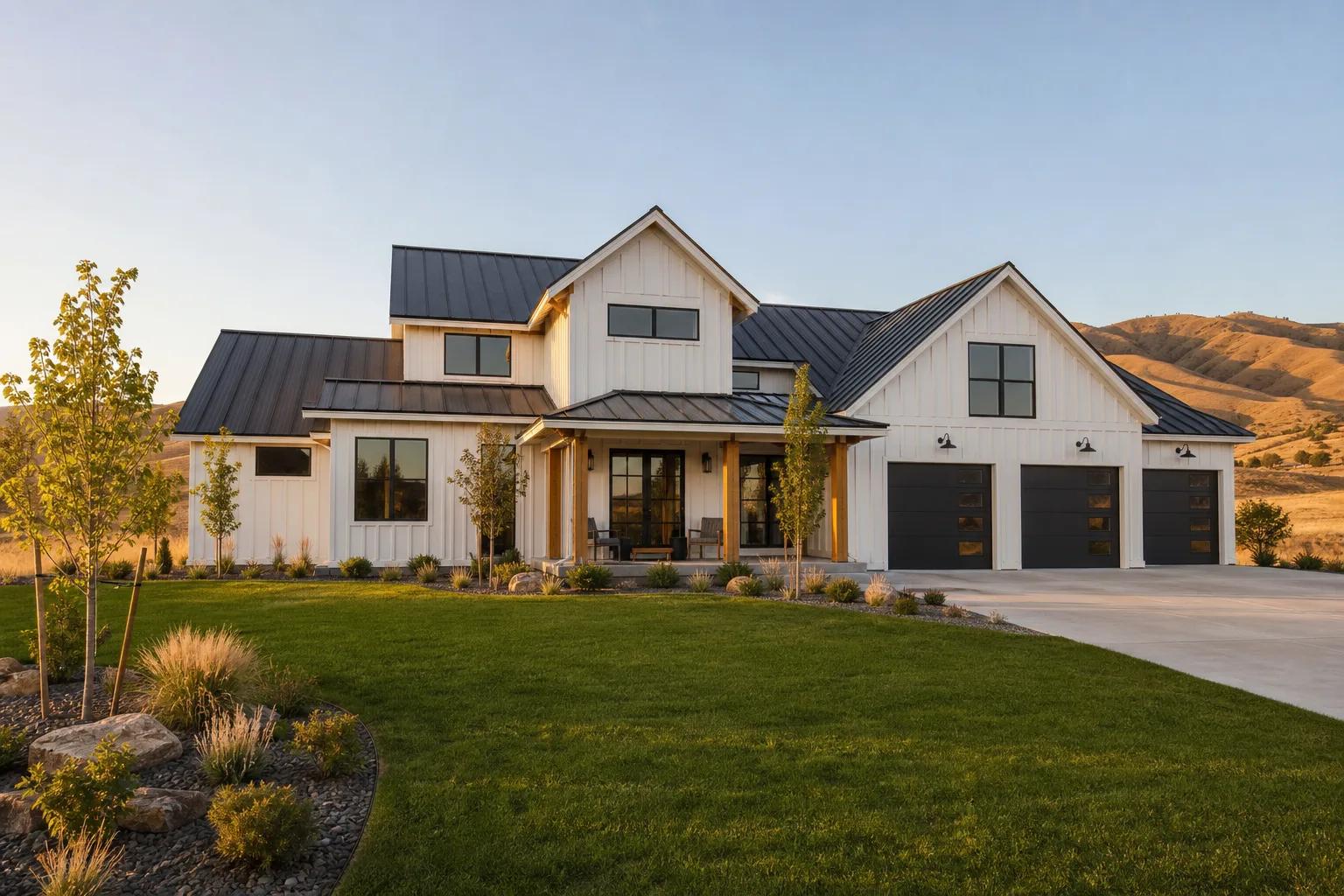
Luxury homes in the Boise area regularly exceed $450 per finished square foot, against $250 to $400 for a typical custom home, both excluding land. There is no useful upper figure. Past a certain specification the house stops being a variation on a standard build and becomes a collection of individually engineered decisions, and quoting an average across those would be dishonest. What is worth doing is explaining exactly where the extra $150 or more per square foot goes, because it is not distributed evenly and it is not mostly in the places people expect. This article sits inside our Boise home building cost guide.
Luxury is not a tier, it is a set of decisions
Tap to expand
Luxury is not a tier, it is a set of decisions
Nobody builds a "luxury home" as a category; they make forty decisions, and about six of them move the number a long way. Homeowners often assume the gap between a $300 and a $450 house is finishes, in the sense of faucets and light fittings and cabinet hardware. Those matter, but they are a smaller share than you would think. The bigger money is structural and geometric, decided during design, invisible on a finish schedule, and impossible to reverse once framing starts. Below are the six that move it most, roughly in order.
Glazing
Tap to expand
Glazing
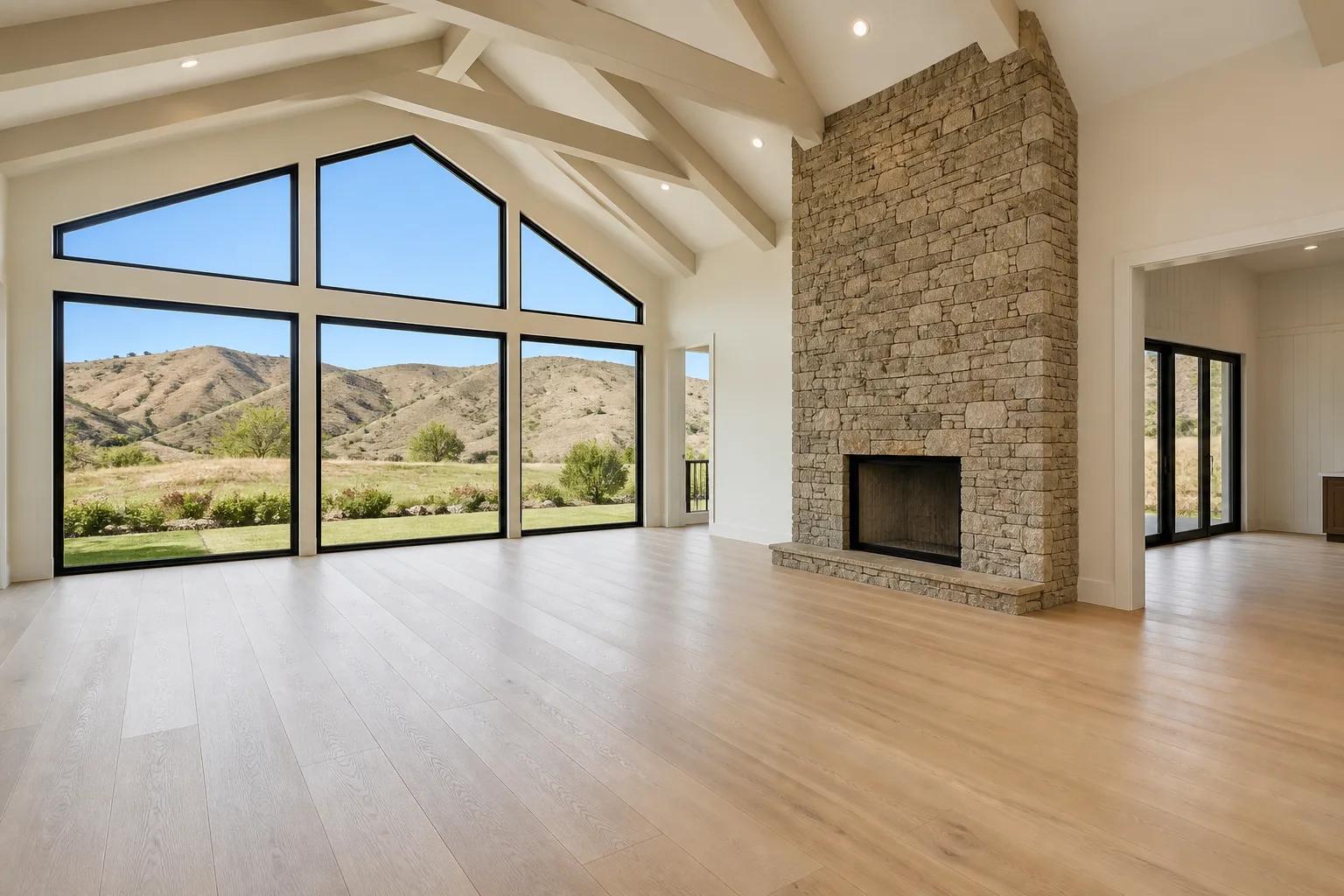
Glass is the most reliable way to add $50 per square foot to a house without changing a single interior selection. A large window unit costs several times what the same area of framed and sided wall costs, and that is before the structural consequences. Wide openings need engineered headers or steel, corner glass needs specific structural and waterproofing detailing, and floor-to-ceiling units change how the wall above and below is built. Then the mechanical design has to answer for the heat gain and loss, so the HVAC system grows to match. In the foothills, where the view is the reason people build, glazing is usually the largest single departure from a standard specification. It is also, in our experience, the luxury spend clients regret least.
Roof geometry and structure
Tap to expand
Roof geometry and structure
Long spans and complex roofs cost money at the framing stage and then keep costing at every trade that follows. A great room with a twenty-foot ceiling and no intermediate support needs engineered beams, and those beams need columns, and those columns need foundations sized for them. A roof with six planes instead of two adds valleys, hips, flashing details, waste, and labour hours, and then adds insulation detailing, drywall corners, and exterior trim on top of that. Cantilevers, deep overhangs, and flat-roof sections each bring their own waterproofing requirements. None of this shows up as a line called "luxury" on a budget. It shows up as framing, engineering, and roofing lines that are all quietly larger than they would otherwise be.
Millwork and cabinetry
Tap to expand
Millwork and cabinetry
Custom millwork is the most visible luxury spend in a house and one of the largest. The distance between good stock cabinetry and fully custom cabinetry built to the room can be a factor of three, and in a high-end home the cabinetry does not stop at the kitchen. It runs through the primary closet, the pantry, the laundry, the mudroom, the office, and often a bar or a library wall. Add panelled walls, coffered or beamed ceilings, wide trim profiles, solid interior doors, and a stair with anything other than standard balusters, and you have a millwork package that rivals the framing bill. This is real craft, it is done by people who are good at it, and it takes shop time. It is also the category clients most consistently say they would spend on again.
Lead time is the hidden cost here. Custom cabinetry has to be measured against the framed and drywalled space, drawn, approved, built, finished, and delivered, and that sequence does not compress. A client who is still choosing a door profile when the drywall is going up has already added weeks to the schedule, and on a financed build weeks cost money. If millwork is central to your house, treat those decisions as early decisions rather than finish decisions.
Stone and tile
Tap to expand
Stone and tile
Natural stone costs more than engineered material to buy, and considerably more to install. A slab has to be selected, templated, fabricated, and set, and unlike a manufactured product it has veining that has to be matched across seams. Full-height stone backsplashes, waterfall ends, book-matched slabs, and stone fireplace surrounds each add fabrication labour. Tile behaves the same way: the material price is only part of it, and large-format tile, mosaic patterns, curbless shower details, and heated floors are all labour-intensive installs. In a house with five bathrooms this line grows quickly. It is worth saying plainly that a well-installed engineered surface will outlast a badly installed stone one, so the installer matters at least as much as the material.
Mechanical systems
Tap to expand
Mechanical systems
High-end mechanical is about capability and control rather than a bigger furnace. Multiple HVAC zones so the upstairs is not warm while the downstairs is cold. Balanced ventilation that brings in filtered fresh air, which matters in a valley with an inversion season and a smoke season. Hydronic or radiant floor heating in bathrooms and entries. Recirculating hot water so a distant primary suite does not run cold for a minute. Whole-house filtration, humidification, structured wiring, and enough electrical capacity for the way people actually live now. Individually none of these is dramatic. Together they routinely add more than the entire lighting package, and they are exactly the kind of thing that becomes prohibitively expensive to add after the drywall is up.

The site
Tap to expand
The site
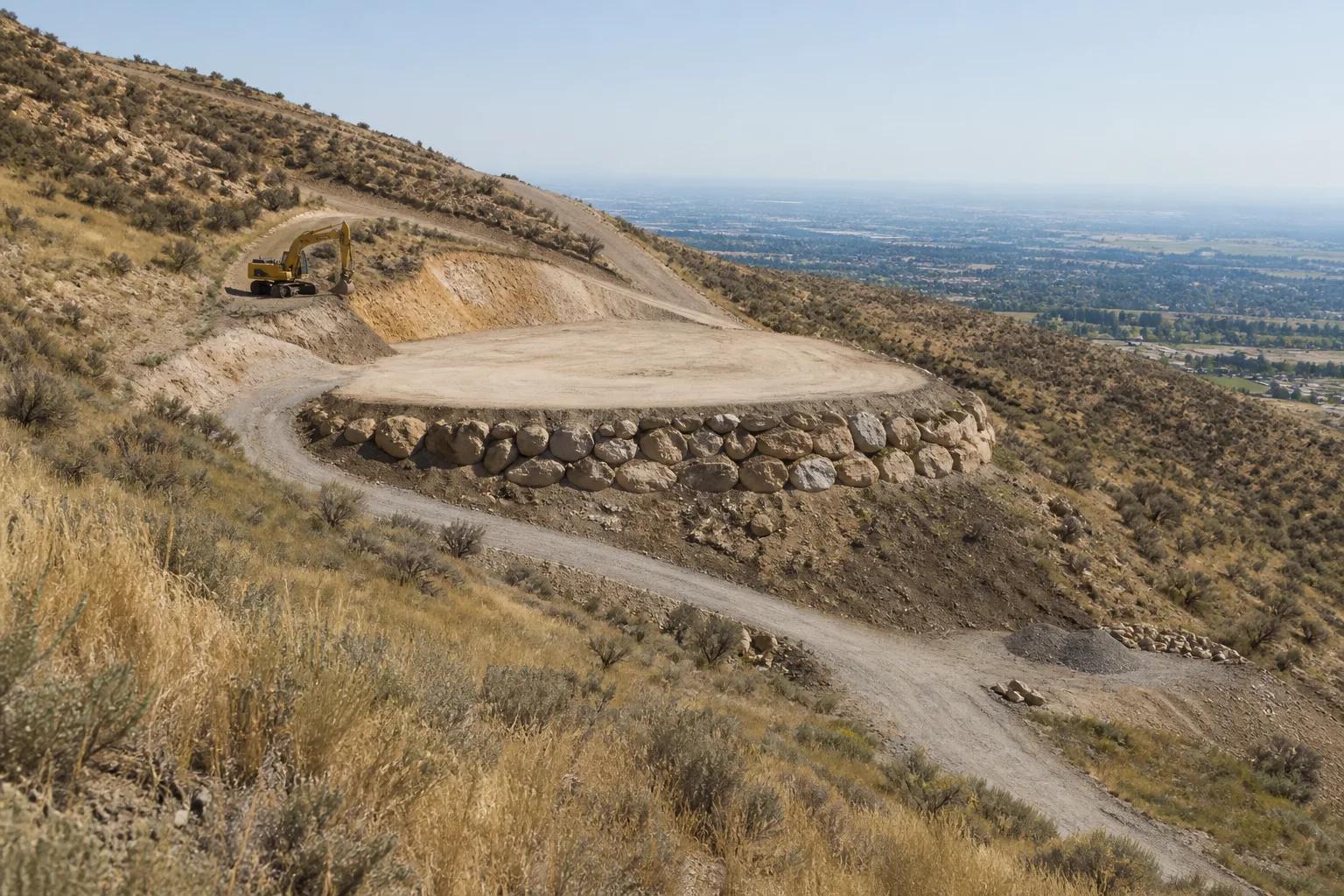
Foothills building pushes the per-square-foot figure up before a single interior decision is made. Slope means excavation, retaining, and a foundation that steps. Geotechnical requirements mean engineering before design is finished. Access means concrete trucks, lumber deliveries, and cranes working somewhere awkward, which costs time on every delivery for the whole build. Wildland-urban interface considerations affect materials and detailing. Rural parcels add a well, a septic system permitted through Central District Health, and sometimes a power extension or a private road, commonly $80,000 to $150,000 of site work against $25,000 to $50,000 on a serviced valley lot. More detail is in what it costs to build in the Boise foothills.
What shows
Tap to expand
What shows
Some luxury money announces itself the moment you walk in, and it tends to be the money spent on light, volume, and surfaces you touch. Large glazing and the view it frames. Ceiling height and the way a room feels because of it. Cabinetry that fits its space exactly instead of approximately, with drawers that close properly and no filler strips. Stone with continuous veining. A stair that was designed rather than assembled. Solid doors with weight to them. These are the things visitors notice without being able to name, and they are the things that make a house feel expensive rather than merely large. If your budget forces a choice, this group is where the visible return lives.
Two smaller things belong in this list because they punch above their cost. Proportion, which costs nothing except attention during design and is the difference between a room that feels right and one that feels almost right. And lighting design, which is not the same as expensive fixtures: layered light, dimming that works, and fittings placed for what the room does rather than in a grid. Both are cheap relative to a stone package and both change how the house feels every single evening.
What does not show, and whether it is still worth it
Tap to expand
What does not show, and whether it is still worth it
Some of the best money in a high-end home is completely invisible once the drywall is up, and it is still usually worth spending. Better air sealing and insulation. Proper flashing and drainage detailing at every penetration. Oversized structure that will never be tested. Sound isolation between floors and around bedrooms. A mechanical room laid out so a technician can actually service the equipment in fifteen years. None of this photographs. All of it determines whether the house is comfortable and quiet and dry in year twelve.
And to be straight about it, some luxury spend is neither visible nor performance. Upgrading a fixture in a guest bathroom nobody uses. Specifying a material because of the name on the box rather than what it does. Building square footage for rooms that will be used twice a year. We would rather tell you that during design than take the money quietly. Spending unevenly, with real depth in the rooms you live in and restraint elsewhere, produces a better house than spreading a large budget evenly across every surface.
How we would approach a high-end budget
Tap to expand
How we would approach a high-end budget
Set the structure, the envelope, and the mechanical capability first, then spend what remains on the rooms you use daily. The order matters because the first three are permanent and the last is replaceable. A kitchen can be redone in twenty years. A poorly detailed wall of glass, an undersized mechanical system, or a badly insulated roof assembly is a problem you live with or open the house up to fix. Decide your glazing and your geometry early, price them honestly during design, and let the finish schedule absorb the adjustment rather than the other way round. That sequencing is what our custom home building process is built around, and it is why we price plans while they can still change.
Getting a real number
Tap to expand
Getting a real number
At this level a per-square-foot figure is close to useless, and a line-item budget is the only thing worth acting on. The bands in this article will tell you whether a project is plausible. They will not tell you what your house costs, because at $450 and above almost every line is specific to your drawings and your lot. Read what actually drives home building costs for the decisions that move the number most, and the cost to build a house in Boise for how a standard budget is composed. When you have a lot and a direction, talk to us and we will put a line-item budget together before anyone breaks ground.