
The honest answer about well and septic costs
Tap to expand
The honest answer about well and septic costs
A well and a septic system are the two largest variable costs on a rural Idaho parcel, and neither can be quoted precisely before testing. Rural parcels around Kuna, Star, Middleton, Caldwell, and the acreage edges of Eagle and Nampa that need a well, a septic system, and access commonly run $80,000 to $150,000 in site work before a foundation is poured, excluding the land and excluding the house. That is a wide band, and the width is not evasion. It reflects the fact that a well is a hole in the ground with an unknown bottom and that septic design is decided by soil nobody has dug into yet. This article breaks down what sits inside that band, what drives each line, and which parts you can pin down before closing. It is part of our guide to buying land to build on in the Treasure Valley.
Why a well cannot be priced exactly in advance
Tap to expand
Why a well cannot be priced exactly in advance
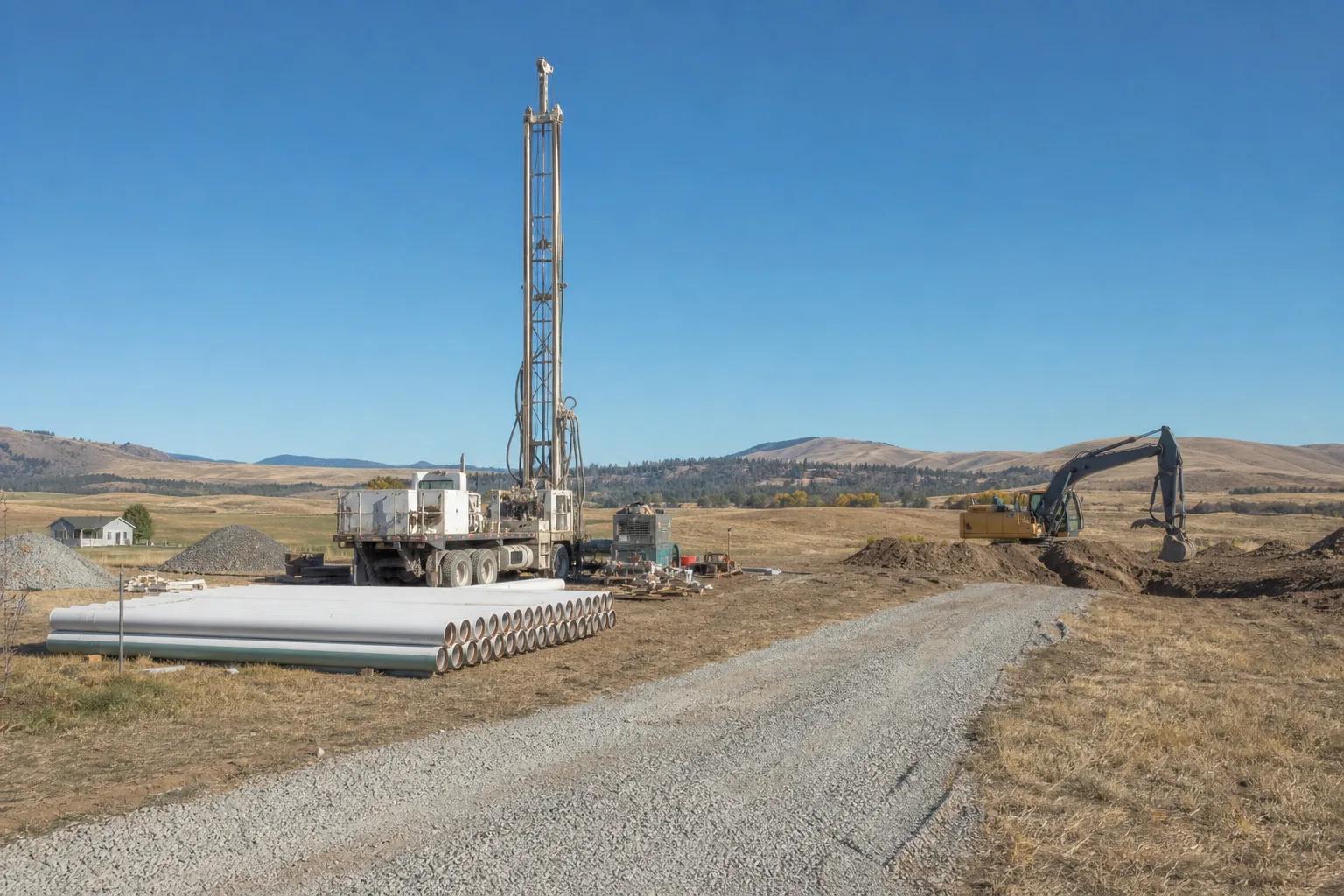
Well drilling is priced substantially by the foot, and the number of feet is unknown until the driller stops. That is the whole problem in one sentence. A driller can look at logs from nearby wells, talk to other drillers who have worked the area, and give you an informed expectation. What no one can do is guarantee the depth at which your particular parcel produces usable water at an adequate flow rate. Neighboring parcels on the same road sometimes come in at very different depths because the geology underneath does not follow property lines. Some parcels produce plenty of water shallow. Some require going considerably deeper, and every additional foot is billed. We have seen buyers treat a neighbor's well as a quotation for their own, and it is not one. Budget the well as a range, keep the top of that range in your contingency, and do not commit the last dollar of your project budget on the assumption of a shallow well.
What actually drives well cost
Tap to expand
What actually drives well cost
Depth is the headline, but four other components make up the rest of the well package, and they are frequently left out of a homeowner's mental math.
| Component | What drives it | Known before you buy? |
|---|---|---|
| Drilling | Depth in feet, and how hard the formation is to drill through | No. Estimated from area experience only |
| Casing | Depth again, plus the diameter and material required | Partly. Scales with depth |
| Pump | Depth of the pump setting and the flow rate needed for the house | No. Sized after the well is completed |
| Pressure tank and controls | House size, fixture count, and irrigation demand | Yes. Designed with the house |
| Trench and service to the house | Distance from well to house, and rock in the trench | Yes, once the building site is set |
The distance item is worth planning around. Every foot between the well and the house is trench, pipe, wire, and labor, and it is one of the few well costs you control by where you choose to site the house. Water quality is separate again: if the water tests hard, high in iron, or high in nitrates, treatment equipment is an added cost that shows up after the water is tested, not before.
What drives septic cost
Tap to expand
What drives septic cost
Septic cost is decided by three things: how the soil percolates, how deep the seasonal high groundwater sits, and how large a drainfield the house requires. Percolation is the rate at which the soil accepts and treats effluent. Soil that drains well needs a smaller field and can often use a conventional gravity system, which is the cheapest good outcome. Tight clay soils, shallow bedrock, or a high water table restrict how the effluent can be dispersed and push the design toward a pressurized distribution system, a mound, or a fully engineered alternative. Drainfield size is driven by the number of bedrooms in the house, which is why the septic conversation has to happen while the floor plan is still flexible. A four-bedroom plan requires more field than a three-bedroom plan, and on a parcel with marginal soils that difference can decide whether the plan fits at all. You also need room for a replacement area, held in reserve for the day the original field reaches the end of its life.
Standard versus engineered systems
Tap to expand
Standard versus engineered systems
The gap between a conventional gravity system and an engineered system is the biggest single swing inside the septic budget. A conventional system is a tank and a gravity-fed drainfield: relatively few moving parts, no power draw, straightforward maintenance. An engineered or pressurized system adds a pump chamber, distribution piping under pressure, controls, and in some designs a treatment component before dispersal. That means more materials, more design work by an engineer, a longer permitting path, and an ongoing maintenance and monitoring obligation for as long as you own the house. None of that is a reason to walk away from a parcel. It is a reason to know before you close, because the difference between the two outcomes is large enough to change what house you can afford to build on the lot. The soil evaluation is what tells you which one you are looking at, and it is cheap relative to the answer it gives.
Permitting through Central District Health
Tap to expand
Permitting through Central District Health
Septic permitting for rural parcels in this area goes through Central District Health, and it runs on its own track separate from the building permit. The sequence is usually a site evaluation with test pits to establish soil profile and groundwater depth, then a system design that reflects the house and the parcel, then permit review and issuance, then installation with inspection. Ada County and Canyon County issue the building permit for the house through their own portals with their own review cadences, and the two processes need to be sequenced so the septic approval is not the thing holding up your foundation. We handle permits, plan review, engineering, and utility applications in-house for Ada and Canyon County, which mostly means we start the septic evaluation early rather than discovering the design constraint at framing. Setback distances also apply here: the septic system, the well, waterways, and property lines all have required separations, and those separations interact with the buildable envelope described in how to tell if a lot is actually buildable.
What else sits inside $80,000 to $150,000
Tap to expand
What else sits inside $80,000 to $150,000
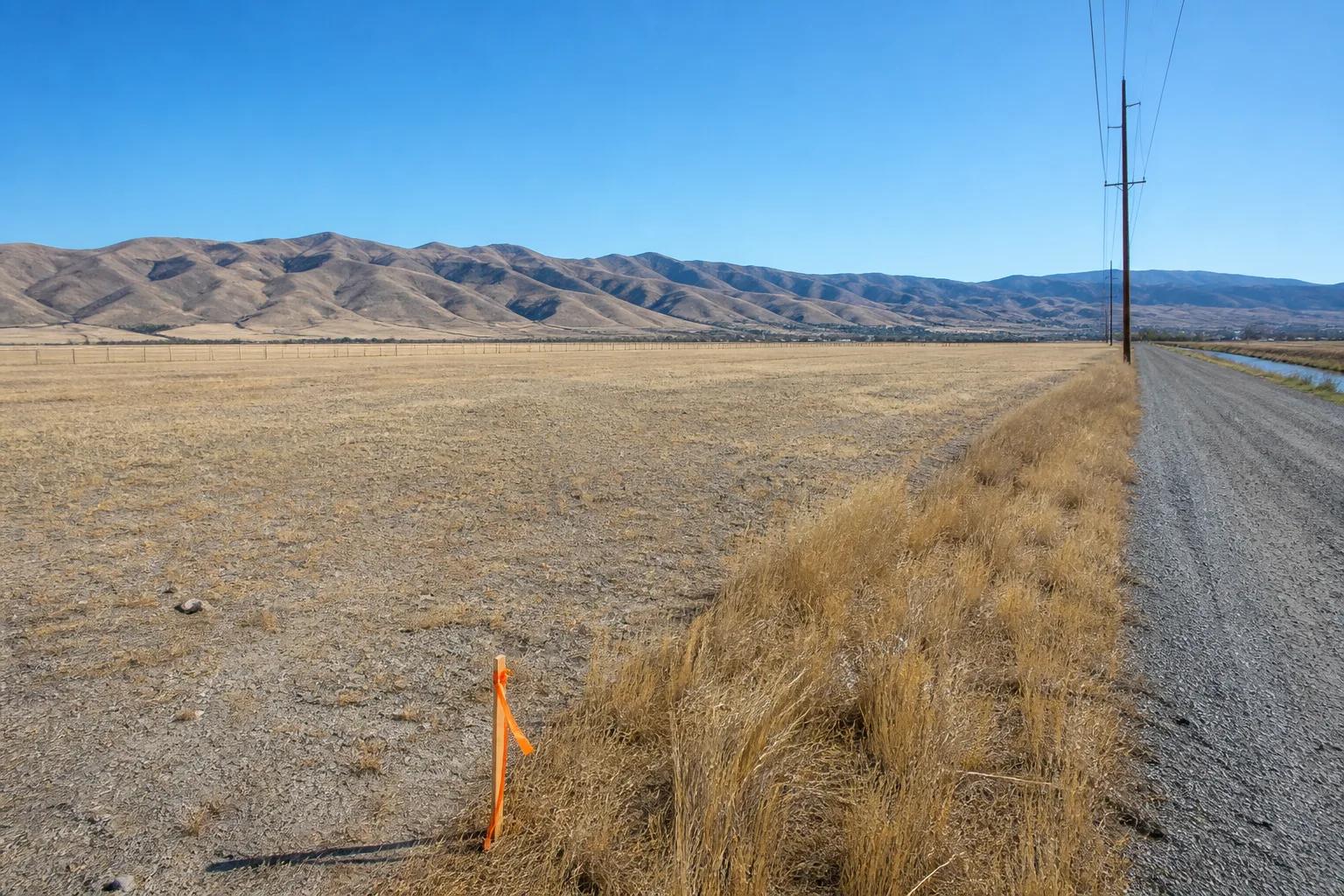
The well and septic are the headline items, but the rural site work band covers everything needed to turn raw land into a lot a builder can pour on. That list typically includes the driveway and access built to the standard the fire district requires, which on a long approach is a serious cost in gravel, base, and grading. It includes a power extension, and if the nearest service is a distance away, or if a new transformer or an easement across a neighbor is needed, that item alone can be substantial. It includes rough grading, drainage, and erosion control. It includes the trenching that carries water and power from the well and the meter to the house. And it includes the septic system with its permitting and inspection. By contrast, a serviced lot in a platted subdivision usually runs $25,000 to $50,000 in site work, because the developer already paid for the road, the mains, and the stubs. That difference between $25,000 to $50,000 and $80,000 to $150,000 is the real price of rural land, and it belongs in your comparison when a country parcel looks cheaper per acre.
How we sequence the money
Tap to expand
How we sequence the money
Test first, design second, drill and build third, because that order is what stops a surprise from becoming a stalled project. During the feasibility period on a parcel we want the soil evaluation and test pits done, the well area identified with a driller's informed view of expected depth, written confirmation from the power provider on the connection point, and confirmation of the access standard required. That package costs a few thousand dollars and it converts most of the $80,000 to $150,000 band into a much narrower and more honest number for your specific parcel. Only the well truly remains a range. Then the house design responds to what the ground allows: bedroom count against drainfield capacity, house siting against trench lengths and driveway grade, foundation type against soils. Building in the other order, where the plan is fixed first and the ground is assessed later, is how people end up paying for redesign twice.
What we will not promise you
Tap to expand
What we will not promise you
We will not give you a fixed well price before drilling, and you should be cautious about anyone who does. The same goes for a septic price before a soil evaluation. A number offered with confidence before testing is either padded heavily, which means you are paying for someone else's risk, or it is optimistic and will be corrected by a change order later, which is worse. What we will do is give you a defensible range for your specific parcel based on real local drilling experience and the actual soil data, tell you plainly which parts of it are still unknown, and carry an appropriate contingency in the budget so an unknown does not become a crisis. Allowances are set at what things actually cost here rather than at a number chosen to win the bid, and on rural work that discipline matters more than anywhere else.
Find out what your parcel needs
Tap to expand
Find out what your parcel needs
A written lot evaluation runs $950 to $3,500 and covers septic feasibility, well expectations, access, utilities, and a site work cost range specific to the parcel you are considering. If you already own the land, our build on your lot service starts from the ground conditions and works up. Before you get that far, run the parcel through our lot evaluation checklist. When you have a specific address or parcel number, send it to us and we will tell you what we would want tested first.

