How to use this checklist
Tap to expand
How to use this checklist
Work the list in five categories, in this order: access and legal, utilities, ground conditions, regulatory, and cost. The order matters because the early categories can end the conversation. There is no point pricing a septic system on a parcel you cannot legally reach. Each item below says what to check, who is actually able to answer it, and what a bad answer costs you, because a checklist without consequences is just a list. Use it to screen parcels quickly and to write your offer, then pay for real testing on the one parcel you intend to buy. This is the working companion to our guide on buying land to build on in the Treasure Valley and to how to tell if a lot is actually buildable.
Category 1: access and legal
Tap to expand
Category 1: access and legal
These items are pass or fail. A parcel that fails one of them is not a bargain at any price.
| Check | Who answers it | What a bad answer costs |
|---|---|---|
| Legal access to a public road, by frontage or recorded easement | Title company, from the preliminary title report | Everything. No permit, no financing, no insurance, and land you cannot use |
| Easements burdening the parcel: irrigation, utility, access, shared driveway | Title company and the recorded documents behind each exception | Loss of the part of the lot you wanted to build on |
| Covenants, conditions, and restrictions, plus any architectural committee | Title company and the HOA or subdivision documents | Design rework, or a house you are not allowed to build |
| Boundary certainty and monumentation | Licensed surveyor | A structure over a line, or a neighbor dispute you inherited |
| Water rights, if the parcel carries any | Title company, irrigation district, and your attorney | Losing irrigation water you assumed came with the land |
| Fire district access standard: width, grade, surface, turnaround | The fire district with jurisdiction | An unbudgeted driveway rebuild before you can occupy |
Category 2: utilities
Tap to expand
Category 2: utilities
The question is never whether a utility exists. It is where the connection point is and who pays to reach it.
| Check | Who answers it | What a bad answer costs |
|---|---|---|
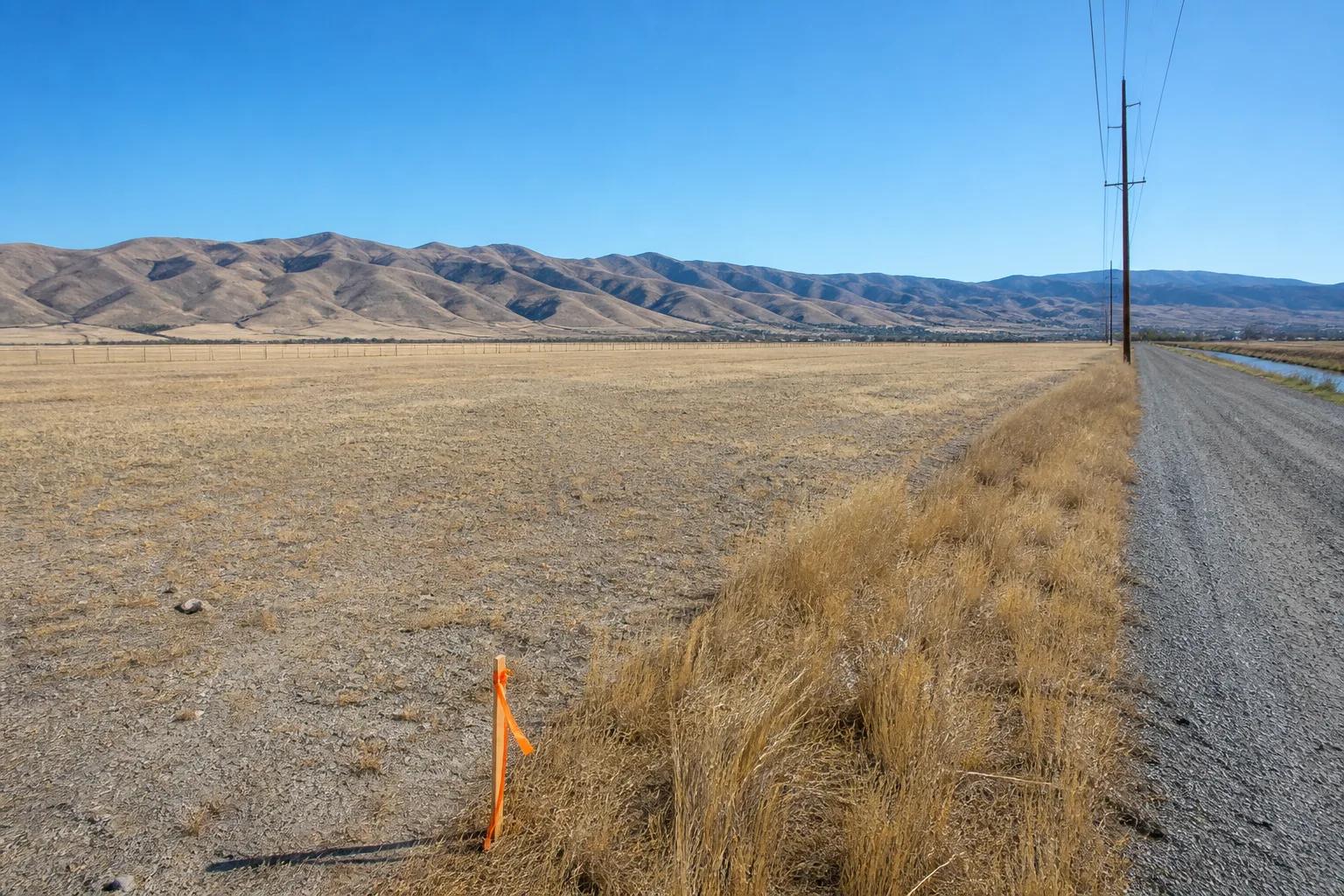
| Electric service: nearest point, transformer capacity, extension responsibility | The electric provider, in writing | A major line item and a long lead time you did not plan for |
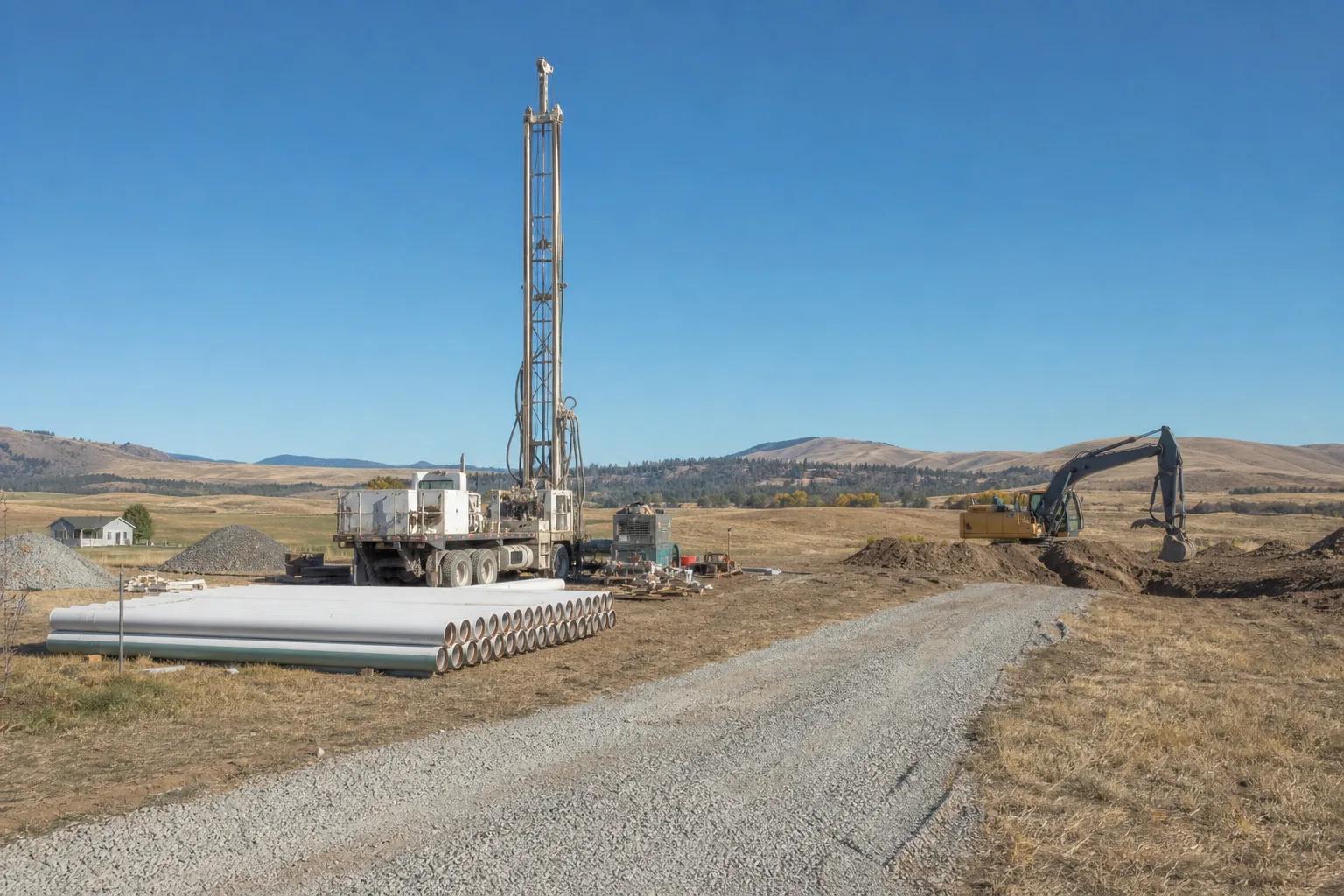
| Water: city main and eligibility to connect, or a well | The city utility department, or a well driller | Moving from a meter fee to a full well package |
| Sewer availability and service boundary | The city or sewer district | Moving from a sewer connection to a septic system |
| Natural gas availability | The gas provider | A mechanical redesign and higher operating cost |
| Broadband or fiber to the parcel | The providers serving the road | Quality of life, and resale on a rural parcel |
| Impact, connection, and meter fees by jurisdiction | Each agency, quoted at feasibility | Thousands of dollars appearing after your budget was set |
The fee categories are worth understanding separately, because an impact fee and a meter fee are different things levied by different bodies. We cover that in impact fees and utility connections in Ada and Canyon County.
Category 3: ground conditions
Tap to expand
Category 3: ground conditions
This is the category that requires digging, and it is the one buyers most often defer until after closing, which is exactly backwards.
| Check | Who answers it | What a bad answer costs |
|---|---|---|
| Soil bearing capacity and expansive or collapsible soils | Geotechnical engineer, from borings or test pits | An engineered foundation instead of a conventional one |
| Undocumented fill, buried debris, or prior site use | Geotechnical engineer, plus seller disclosure | Excavation, export, and re-compaction before you can build |
| Seasonal high groundwater depth | Test pits during the season it matters | Losing the basement, or a septic redesign |
| Septic percolation and drainfield sizing, plus a replacement area | Soil evaluator and Central District Health | An engineered system rather than a conventional gravity one |
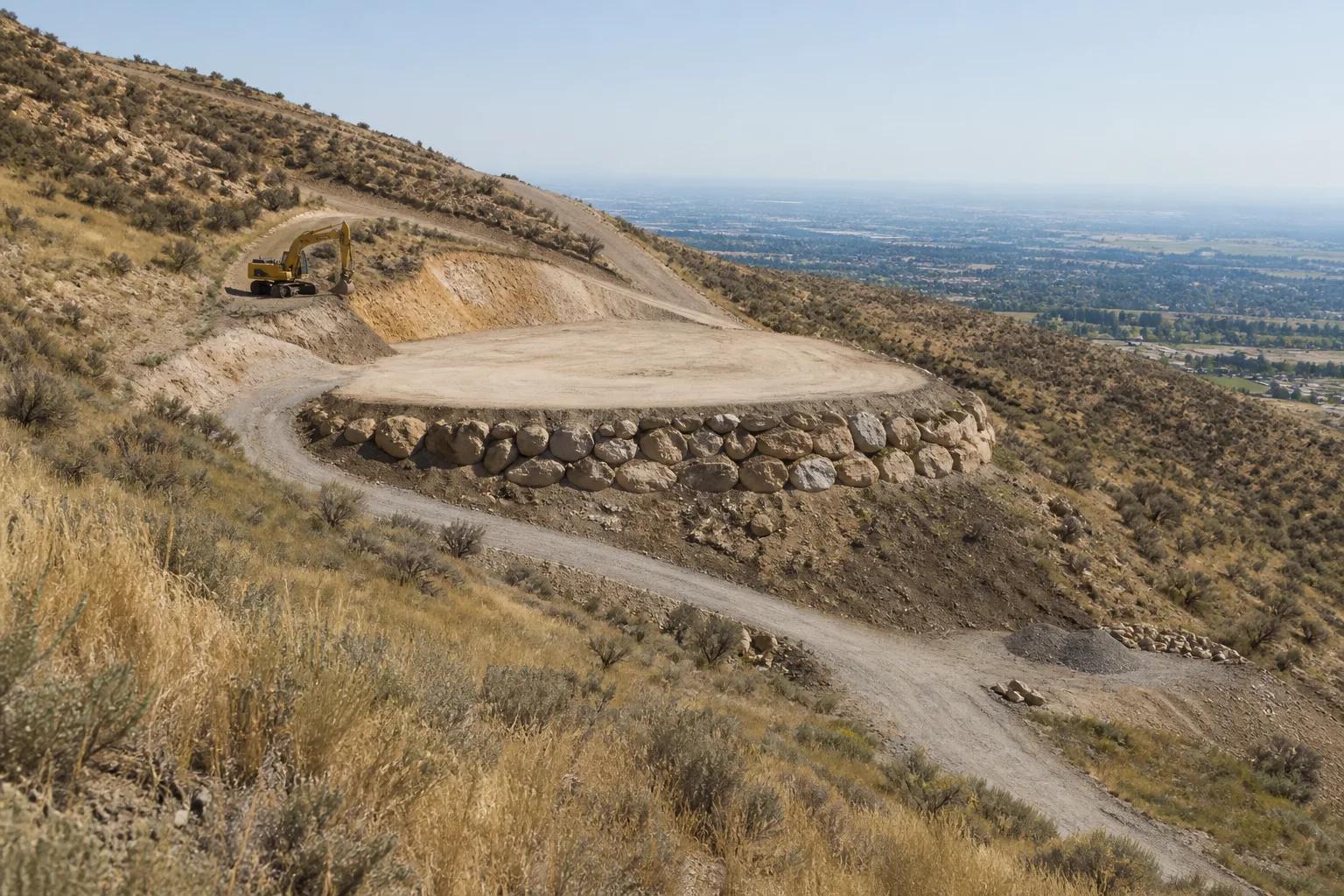
| Slope, cut and fill volume, and retaining requirements | Surveyor and civil engineer, from a topographic survey | Retaining walls and excavation that can dwarf the lot price |
| Drainage and where stormwater actually goes | Civil engineer and a site visit in wet weather | Water against the foundation for the life of the house |
Septic is the item with the widest cost swing on a rural parcel, and it interacts with the floor plan because drainfield size follows bedroom count. See what a well and septic system costs in Idaho for how the design decisions connect.
Category 4: regulatory
Tap to expand
Category 4: regulatory
Regulatory checks are cheap, fast, and free, and they are the ones people skip because the answers feel obvious.
| Check | Who answers it | What a bad answer costs |
|---|---|---|
| Zoning designation and whether a single-family dwelling is permitted | The city or county planning department with jurisdiction | The entire purchase, if a house is not a permitted use |
| Minimum lot size, density, and whether a second dwelling is allowed | Planning department | The shop home or guest unit you were counting on |
| Setbacks and height limits, and the resulting buildable envelope | Planning department, applied to your survey | A plan that has to be redrawn, or a variance you may not get |
| Overlays: hillside, floodplain, airport influence, area of impact | Planning department and the flood map | Elevation certificates, flood insurance, or added engineering |
| Which jurisdiction reviews the permit, Ada or Canyon | The county, confirmed by parcel number | A misestimated schedule, since the two use different portals and cadences |
| Annexation requirements if the parcel is near a city limit | The city | An unexpected process before you can connect to services |
Category 5: cost
Tap to expand
Category 5: cost
Add the site work to the asking price before you compare parcels, because land is only cheap relative to what it takes to build on it. On a serviced lot in a platted subdivision, site work commonly runs $25,000 to $50,000. On a rural parcel needing a well, septic, and access, it commonly runs $80,000 to $150,000 before a foundation is poured, excluding land. A rural parcel priced $60,000 below a serviced lot is not a saving once you carry the difference in site work. Then layer the house itself: $250 to $400 per finished square foot for a custom home, $225 to $300 for semi-custom, and near $225 for a simple single-level on a flat valley lot, all excluding land. Design and engineering typically add 5 to 12 percent of construction cost, roughly $9,000 to $35,000. Write those numbers next to the asking price of every parcel you are considering, and the ranking usually changes.
There is a sequencing point buried in this category too. Land is often bought with cash or a land loan, and the house is financed separately, which means the money for the parcel and the money for the site work frequently come out of different pockets at different times. Buyers who plan only for the purchase can find themselves owning ground they cannot afford to develop for another year, paying interest on land that is doing nothing. Before you make an offer, know roughly what the whole path costs: the parcel, the site work, the design and engineering, and the house. If the total does not work, the right time to learn that is while you still have a contingency to exercise rather than after you hold the deed.
Nobody checks all of this for you
Tap to expand
Nobody checks all of this for you
The most common reason an item gets missed is that every professional in the transaction reasonably assumes it belongs to someone else. A real estate agent represents the transaction and is not qualified to assess soils. A title company reports what is recorded and does not opine on whether the septic will pass. A surveyor draws the boundary and does not price the driveway. A driller knows wells and not zoning. Each of them does their job correctly, and the gap between the jobs is where buyers get hurt. Somebody has to hold the whole list, and if that is not going to be you, it should be a builder who has to live with the answers. That is the entire reason our lot evaluation exists as a paid service rather than a sales call.
Deal breakers versus price adjustments
Tap to expand
Deal breakers versus price adjustments
Only a few findings should end a purchase. Most should change the price you offer. The genuine deal breakers are no legal access, a zone that does not permit a dwelling, a floodway designation, or a parcel where the buildable envelope after setbacks and easements cannot hold the house you need. Everything else is a number. Poor soils mean an engineered foundation, which has a price. Tight soils mean a pressurized septic system, which has a price. A distant transformer means a power extension, which has a price. Steep ground means excavation and retaining, which has a price, and a large one, as covered in what it costs to build in the Boise foothills. Once you know the price, you can negotiate against it or walk away on economics rather than on fear. Buyers who do the testing usually end up with more confidence, not less, even when the findings are unwelcome.
What a written evaluation gives you
Tap to expand
What a written evaluation gives you
A written lot evaluation turns this checklist into a document with numbers in it, which is what you actually need to make a decision or negotiate a price. Ours covers legal access and the title exceptions that matter, zoning and permitted use for the jurisdiction that governs the parcel, the buildable envelope drawn against setbacks and easements, utility connection points and what extending each involves, septic and well feasibility, ground conditions and what they imply for the foundation, and a site work cost range specific to the parcel. It runs $950 to $3,500 depending on size and complexity. Against a parcel price and a construction budget, that is a rounding error, and it is the cheapest point in the whole project at which to change your mind.
Run your parcel through it
Tap to expand
Run your parcel through it
Use this list to screen the parcels you are watching, then have the one you are serious about evaluated properly before your feasibility period runs out. If you already own land, our build on your lot service starts from what the ground allows and works up to a line-item budget before we break ground. Send us the address or parcel number through our contact page and tell us where you are in the process, and we will tell you which items on this list we would check first for that specific piece of ground.